← BackWalking guide →
Trip Overview

Barcelona

3 Days · Solo · Balanced
citywalkplan.com
Daily Plan
Day 1
3 Spots
Gothic Quarter · Barcelona Cathedral · Mercat de Santa Caterina
Day 2
3 Spots
Casa Batlló · La Rambla · La Boqueria
Day 3
3 Spots
Park Güell · Sagrada Família · Palau de la Música Catalana Night
Trip Notes
The first page gives the full route overview. Each following page breaks the trip into a single-day map and spot cards so it is easy to share, print, or turn into a PDF.
Keep CityWalk Plan Free
Trip planning is free. If this itinerary helps, please consider booking through our partner links to support us.
No extra cost to you. Affiliate URLs can be added later.

Day 1

Barcelona · 3 Spots
1
Gothic Quarter
Gothic Quarter
Neighborhood · 1.5-2 hours
The Gothic Quarter (Catalan: Barri Gòtic [ˈbari ˈɣɔtik] or El Gòtic; Spanish: Barrio Gótico) is the historic centre of the old city of Barcelona. It stretches from La Rambla to Via Laietana, and from the Mediterranean seafront to the Ronda de Sant Pere. It is a part of Ciutat Vella district. The quarter encompasses the oldest parts of the city of Barcelona, and includes the remains of the city's Roman wall and several notable medieval landmarks.
NoteThis area works best when you leave room to walk slowly, browse side streets, and stop for coffee or snacks.
Wikipedia →
2
Barcelona Cathedral
Barcelona Cathedral
Historic Site · 1.5-2 hours
The Cathedral of the Holy Cross and Saint Eulalia (Catalan: Catedral de la Santa Creu i Santa Eulàlia), also known as Barcelona Cathedral, is the seat of the Archbishop of Barcelona in Catalonia, Spain. The cathedral was constructed from the thirteenth to fifteenth centuries, with the principal work done in the fourteenth century. The cloister, which encloses the Well of the Geese (Font de les Oques), was completed in 1448.
NoteCheck the official site for the latest entry policy and opening hours. Early visits are usually calmer and better for photos.
Wikipedia →
3
Mercat de Santa Caterina
Market · 1-1.5 hours
Mercat de Santa Caterina is one of the most notable market experiences in Barcelona, and works well as a core stop in a first itinerary.
NoteGo earlier for the freshest food and shorter lines. Some stalls still prefer cash.
Wikipedia →

Day 2

Barcelona · 3 Spots
1
Casa Batlló
Casa Batlló
Historic Site · 1.5-2 hours
Casa Batlló (Catalan pronunciation: [ˈkazə βəˈʎːo] ) is a building in the center of Barcelona, Spain. It was designed by Antoni Gaudí, and is considered one of his masterpieces. A remodel of a previously built house, it was redesigned in 1904 by Gaudí (but the actual construction works hadn't begun at this point) and has been refurbished several times since. Gaudí's assistants Domènec Sugrañes i Gras, Josep Canaleta and Joan Rubió also contributed to the renovation project.
NoteCheck the official site for the latest entry policy and opening hours. Early visits are usually calmer and better for photos.
Wikipedia →
2
La Rambla
La Rambla
Neighborhood · 1.5-2 hours
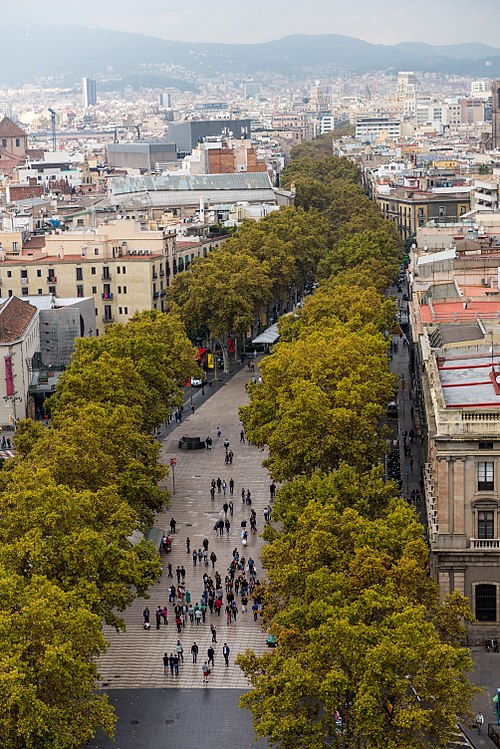
La Rambla (Catalan pronunciation: [lə ˈramblə]) is considered the most well known street in central Barcelona. A tree-lined pedestrian street, it stretches for 1.2 kilometres (3⁄4 mile) connecting the Plaça de Catalunya in its center with the Christopher Columbus Monument at Port Vell. La Rambla forms the boundary between the neighbourhoods of the Barri Gòtic to the east and the El Raval to the west. La Rambla can be crowded, especially during the height of the tourist season.
NoteThis area works best when you leave room to walk slowly, browse side streets, and stop for coffee or snacks.
Wikipedia →
3
La Boqueria
La Boqueria
Market · 1-1.5 hours
The Mercat de Sant Josep de la Boqueria (Catalan: [məɾˈkad də ˈsaɲ ʒuˈzɛb də lə βukəˈɾi.ə]; Spanish: Mercado de San José de la Boquería), usually simply referred to as La Boqueria, is a large public market in the Ciutat Vella district of Barcelona, Catalonia, Spain, and one of the city's foremost tourist landmarks, with an entrance from La Rambla, not far from the Liceu, Barcelona's opera house. The market has a very diverse selection of goods.
NoteGo earlier for the freshest food and shorter lines. Some stalls still prefer cash.
Wikipedia →

Day 3

Barcelona · 3 Spots
1
Park Güell
Park Güell
Park · 1.5-2 hours
Park Güell (Catalan: Parc Güell [ˈpaɾɡ ˈɡweʎ]; Spanish: Parque Güell) is a complex of parks and gardens in Barcelona with architectural elements, located in the La Salut neighborhood of the Gràcia district in Barcelona, Catalonia, Spain. It is situated on the southern slope of the Turó del Carmel hill, part of the Collserola mountain range, overlooking the city. The separate Parc del Carmel lies on the northern side of the same hill.
NoteBring water and sun protection. Early morning or late afternoon usually feels the most comfortable.
Wikipedia →
2
Sagrada Família
Sagrada Família
Historic Site · 1.5-2 hours
Basílica i Temple Expiatori de la Sagrada Família, or simply Sagrada Família, is a church under construction in the Eixample district of Barcelona, Catalonia, Spain. Designed by the Catalan architect Antoni Gaudí, it is the largest unfinished Catholic church in the world. In 2005, Sagrada Família was added to an existing (1984) UNESCO World Heritage Site, "Works of Antoni Gaudí". On 7 November 2010, Pope Benedict XVI consecrated the church and proclaimed it a minor basilica.
NoteCheck the official site for the latest entry policy and opening hours. Early visits are usually calmer and better for photos.
Wikipedia →
3
Palau de la Música Catalana Night
Entertainment · 2-2.5 hours
Palau de la Música Catalana (Catalan pronunciation: [pəˈlaw ðə lə ˈmuzikə kətəˈlanə], English: Palace of Catalan Music) is a concert hall in Barcelona, Catalonia, Spain. Designed in the Catalan modernista style by the architect Lluís Domènech i Montaner, it was built between 1905 and 1908 for Orfeó Català, a choral society founded in 1891 that was a leading force in the Catalan cultural movement that came to be known as the Renaixença (Catalan Rebirth). It was inaugurated on 9 February 1908.
NotePopular experiences often sell out first on weekends and holidays, so advance booking is safer.
Wikipedia →
FAQ

Barcelona 3-day itinerary: FAQ

How many days do you need in Barcelona?
Three days is a comfortable amount of time to walk Barcelona's main areas without rushing. This itinerary gives each day to one part of the city, with room for meals and unplanned detours.
Is 3 days enough for Barcelona?
Yes. Three days covers the highlights of Barcelona on foot at an unhurried pace. With more time you can add day trips or slower neighbourhood wandering, but three days sees the essentials.
Can you do Barcelona in 2 days or one day?
Yes. For two days, follow Day 1 and Day 2 and drop the third; for a single day, walk Day 1, which covers the most iconic stretch. The route is split by area so it shortens cleanly.
How much walking is in this Barcelona itinerary?
Each day is a comfortable walk grouped into one neighbourhood, so you spend the day walking rather than commuting between far-apart sights. For the most relaxed pace, follow the day-by-day plan above and let a tram or taxi cover the longest gaps.
Can you edit or export this Barcelona itinerary?
Yes. It is a free, self-guided walking itinerary. Open it in the Barcelona planner to reorder or remove stops, share a link, or export an offline copy to follow on your phone.