← BackWalking guide →
Trip Overview

Rome

3 Days · Solo · Balanced
citywalkplan.com
Daily Plan
Day 1
3 Spots
St. Peter's Basilica · Colosseum · Roman Forum
Day 2
3 Spots
Capitoline Museums · Pantheon · Piazza Navona
Day 3
3 Spots
Spanish Steps · Trevi Fountain · Piazza Venezia
Trip Notes
The first page gives the full route overview. Each following page breaks the trip into a single-day map and spot cards so it is easy to share, print, or turn into a PDF.
Keep CityWalk Plan Free
Trip planning is free. If this itinerary helps, please consider booking through our partner links to support us.
No extra cost to you. Affiliate URLs can be added later.
About this route

How this Rome walk is built

Why this order. Day 1 covers ancient Rome and the Vatican, Day 2 the centro storico, and Day 3 the Tridente around the Spanish Steps. One honest catch: Day 1 spans the river, so take a bus between St. Peter's and the Colosseum rather than walking the dull stretch between them.

How far each day. About 5 to 6 km a day, much of it on cobblestones, so wear genuinely broken-in shoes.

What you can skip. The Spanish Steps are a quick photo, not a long stop. Don't build an afternoon around them.

If it rains. The Capitoline and Vatican museums and the domed Pantheon carry the wet days easily.

First time vs second visit. First-timers keep the headline sights. Returning visitors should swap Day 3 for Trastevere and a morning on the Appian Way.

Day 1

Rome · 3 Spots
1
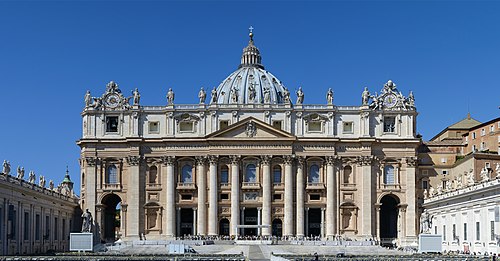
St. Peter's Basilica
Historic Site · 1.5-2 hours
The Papal Basilica of Saint Peter in the Vatican (Italian: Basilica Papale di San Pietro in Vaticano), or simply St. Peter's Basilica (Latin: Basilica Sancti Petri; Italian: Basilica di San Pietro [baˈziːlika di sam ˈpjɛːtro]), is a church of the Italian High Renaissance located in Vatican City, an independent microstate enclaved within the city of Rome, Italy. It was initially planned in the 15th century by Pope Nicholas V and then Pope Julius II to replace the ageing Old St.
NoteCheck the official site for the latest entry policy and opening hours. Early visits are usually calmer and better for photos.
Wikipedia →
2
Colosseum
Colosseum
Historic Site · 1.5-2 hours
The Colosseum ( KOL-ə-SEE-əm; Italian: Colosseo [kolosˈsɛːo]) is an elliptical amphitheatre in the centre of the city of Rome, Italy, just east of the Roman Forum. It is the largest ancient amphitheatre ever built, and is the largest standing amphitheatre in the world. Construction began under the Emperor Vespasian (r. 69–79 AD) in 72 and was completed in AD 80 under his successor and heir, Titus (r. 79–81). Further modifications were made during the reign of Domitian (r. 81–96).
NoteCheck the official site for the latest entry policy and opening hours. Early visits are usually calmer and better for photos.
Wikipedia →
3
Roman Forum
Roman Forum
Historic Site · 1.5-2 hours
The Roman Forum (Italian: Foro Romano), also known by its Latin name Forum Romanum, is a rectangular forum (plaza) surrounded by the ruins of several important ancient government buildings at the centre of the city of Rome. Citizens of the ancient city referred to this space, originally a marketplace, as the Forum Magnum, or simply the Forum.
NoteCheck the official site for the latest entry policy and opening hours. Early visits are usually calmer and better for photos.
Wikipedia →

Day 2

Rome · 3 Spots
1
Capitoline Museums
Capitoline Museums
Museum · 2-2.5 hours
The Capitoline Museums (Italian: Musei Capitolini) are a group of art and archaeological museums located on the Capitoline Hill in Rome, Italy. Their principal buildings are the Palazzo dei Conservatori and the Palazzo Nuovo, which face each other across Piazza del Campidoglio, the square designed by Michelangelo in 1536 and completed over the course of the following centuries.
NoteReserve timed entry when available. A short highlights route and audio guide usually make the visit much more efficient.
Wikipedia →
2
Pantheon
Pantheon
Historic Site · 1.5-2 hours
The Pantheon (UK: , US: ; Latin: Pantheum, from Ancient Greek Πάνθειον (Pantheion) '[temple] of all the gods') is an ancient 2nd century Roman temple and, since AD 609, a Catholic church called the Basilica of St. Mary and the Martyrs (Italian: Basilica Santa Maria ad Martyres) in Rome, Italy. It is perhaps the most famous, and architecturally most influential, rotunda.
NoteCheck the official site for the latest entry policy and opening hours. Early visits are usually calmer and better for photos.
Wikipedia →
3
Piazza Navona
Piazza Navona
Neighborhood · 1.5-2 hours
Piazza Navona (pronounced [ˈpjattsa naˈvoːna]) is a public open space in Rome, Italy. It is built on the site of the 1st century AD Stadium of Domitian and follows the form of the open space of the stadium in an elongated oval. The ancient Romans went there to watch the agones ("games"), and hence it was known as "Circus Agonalis" ("competition arena"). In the 17th century it became a showcase for Baroque design, with work by Bernini and Borromini among others.
NoteThis area works best when you leave room to walk slowly, browse side streets, and stop for coffee or snacks.
Wikipedia →

Day 3

Rome · 3 Spots
1
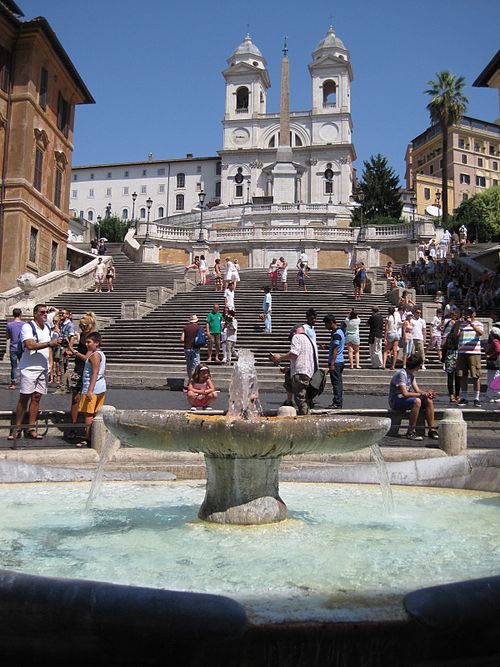
Spanish Steps
Spanish Steps
Landmark · 1-1.5 hours
The Spanish Steps (Italian: Scalinata di Trinità dei Monti) in Rome, Italy, climb a steep slope between the Piazza di Spagna at the base and the Piazza Trinità dei Monti, dominated by the Trinità dei Monti church, at the top. The monumental stairway of 135 steps is linked with the Trinità dei Monti church, under the patronage of the Bourbon kings of France, at the top of the steps and the Spanish Embassy to the Holy See in the Palazzo Monaldeschi at the bottom of the steps.
NoteAim for early morning or late afternoon light. Popular viewpoints often need timed tickets in peak season.
Wikipedia →
2
Trevi Fountain
Trevi Fountain
Landmark · 1-1.5 hours
The Trevi Fountain (Italian: Fontana di Trevi) is an 18th-century fountain in the Trevi district in Rome, Italy, designed by Italian architect Nicola Salvi and completed by Giuseppe Pannini in 1762. Standing 26.3 metres (86 ft) high and 49.15 metres (161.3 ft) wide, it is the largest Baroque fountain in the city and one of the most famous fountains in the world.
NoteAim for early morning or late afternoon light. Popular viewpoints often need timed tickets in peak season.
Wikipedia →
3
Piazza Venezia
Piazza Venezia
Landmark · 1-1.5 hours
Piazza Venezia (Italian: [ˈpjattsa veˈnɛttsja]; "Venice Square") is a central hub of Rome, Italy, in which several thoroughfares intersect, including the Via dei Fori Imperiali and the Via del Corso. It takes its name from the Palazzo Venezia, built by the Venetian Cardinal, Pietro Barbo (later Pope Paul II) alongside the church of Saint Mark, the patron saint of Venice. The Palazzo Venezia served as the embassy of the Republic of Venice in Rome.
NoteAim for early morning or late afternoon light. Popular viewpoints often need timed tickets in peak season.
Wikipedia →
FAQ

Rome 3-day itinerary: FAQ

How many days do you need in Rome?
Three days is a comfortable amount of time to walk Rome's main areas without rushing. This itinerary gives each day to one part of the city, with room for meals and unplanned detours.
Is 3 days enough for Rome?
Yes. Three days covers the highlights of Rome on foot at an unhurried pace. With more time you can add day trips or slower neighbourhood wandering, but three days sees the essentials.
Can you do Rome in 2 days or one day?
Yes. For two days, follow Day 1 and Day 2 and drop the third; for a single day, walk Day 1, which covers the most iconic stretch. The route is split by area so it shortens cleanly.
How much walking is in this Rome itinerary?
Each day is a comfortable walk grouped into one neighbourhood, so you spend the day walking rather than commuting between far-apart sights. For the most relaxed pace, follow the day-by-day plan above and let a tram or taxi cover the longest gaps.
Can you edit or export this Rome itinerary?
Yes. It is a free, self-guided walking itinerary. Open it in the Rome planner to reorder or remove stops, share a link, or export an offline copy to follow on your phone.