← BackWalking guide →
Trip Overview

Vienna

3 Days · Solo · Balanced
citywalkplan.com
Daily Plan
Day 1
3 Spots
Belvedere Palace · Vienna State Opera · Hofburg
Day 2
3 Spots
Kunsthistorisches Museum · MuseumsQuartier · Naschmarkt
Day 3
3 Spots
Albertina · Palmenhaus · St. Stephen's Cathedral
Trip Notes
The first page gives the full route overview. Each following page breaks the trip into a single-day map and spot cards so it is easy to share, print, or turn into a PDF.
Keep CityWalk Plan Free
Trip planning is free. If this itinerary helps, please consider booking through our partner links to support us.
No extra cost to you. Affiliate URLs can be added later.

Day 1

Vienna · 3 Spots
1
Belvedere Palace
Belvedere Palace
Historic Site · 1.5-2 hours
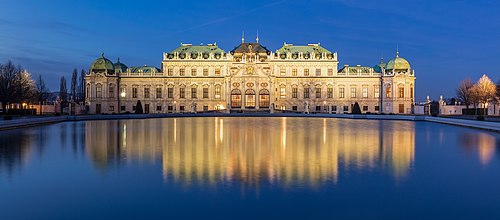
The Belvedere is a historic building complex and art museum in Vienna, Austria. The complex consists of two Baroque palaces, the Upper and Lower Belvedere, together with the Orangery, the Palace Stables, and a formal Baroque garden. It is located in the city's third district, Landstraße, on the south-eastern edge of Vienna's historic centre.
NoteCheck the official site for the latest entry policy and opening hours. Early visits are usually calmer and better for photos.
Wikipedia →
2
Vienna State Opera
Vienna State Opera
Historic Site · 1.5-2 hours
The Vienna State Opera (German: Wiener Staatsoper, IPA: [ˈviːnɐ ˈʃtaːtsˌʔoːpɐ]) is an opera house and opera company located in Vienna, Austria. The 1,709-seat Renaissance Revival venue was the first major building on the Vienna Ring Road. It was built from 1861 to 1869 following plans by August Sicard von Sicardsburg and Eduard van der Nüll, and designs by Josef Hlávka.
NoteCheck the official site for the latest entry policy and opening hours. Early visits are usually calmer and better for photos.
Wikipedia →
3
Hofburg
Hofburg
Historic Site · 1.5-2 hours
The Hofburg (German: [ˈhoːfbʊʁk]) is the former principal imperial palace of the Habsburg dynasty in Austria. Located in the center of Vienna, it was built in the 13th century by Ottokar II of Bohemia and expanded several times afterwards. It also served as the imperial winter residence, as Schönbrunn Palace was the summer residence. Since 1946, it has been the official residence and workplace of the president of Austria. Since 1279, the Hofburg area has been the documented seat of government.
NoteCheck the official site for the latest entry policy and opening hours. Early visits are usually calmer and better for photos.
Wikipedia →

Day 2

Vienna · 3 Spots
1
Kunsthistorisches Museum
Museum · 2-2.5 hours
The Kunsthistorisches Museum Wien (lit. "Vienna Museum of Art History", often referred to as the "Museum of Fine Arts, Vienna") is an art museum in Vienna, Austria. Housed in its festive palatial building on the Vienna Ring Road, it is crowned with an octagonal dome. The term Kunsthistorisches Museum applies to both the institution and the main building. It is the largest art museum in the country.
NoteReserve timed entry when available. A short highlights route and audio guide usually make the visit much more efficient.
Wikipedia →
2
MuseumsQuartier
MuseumsQuartier
Neighborhood · 1.5-2 hours
The MuseumsQuartier Wien (MQ) is an arts and culture complex in the 7th district of Vienna, Austria. Opened in 2001 on the site of the former imperial court stables, it combines historic Baroque buildings with contemporary museum architecture. With 114,310 square metres of space, 61 cultural institutions and around five million visitors annually, it is one of the largest arts and culture complexes in Europe.
NoteThis area works best when you leave room to walk slowly, browse side streets, and stop for coffee or snacks.
Wikipedia →
3
Naschmarkt
Naschmarkt
Market · 1-1.5 hours
The Naschmarkt is a popular fruit and vegetable market in Vienna. Located at the Wienzeile over the Wien River, it is about 1.5 kilometres (0.93 mi) long. Originally known as Aschenmarkt, it started to be called the Naschmarket around 1820. Nowadays, one can buy fresh fruit and vegetables from around the world, exotic herbs, cheese, baked goods such as bread, kaiser rolls, torte, meats, and seafood. There are also many small restaurants which offer e.g.
NoteGo earlier for the freshest food and shorter lines. Some stalls still prefer cash.
Wikipedia →

Day 3

Vienna · 3 Spots
1
Albertina
Albertina
Museum · 2-2.5 hours
The Albertina is a museum in the Innere Stadt (First District) of Vienna, Austria. It houses one of the largest and most important print rooms in the world with approximately 65,000 drawings and approximately 1 million old master prints, as well as more modern graphic works, photographs and architectural drawings.
NoteReserve timed entry when available. A short highlights route and audio guide usually make the visit much more efficient.
Wikipedia →
2
Palmenhaus
Palmenhaus
Entertainment · 2-2.5 hours
The Palmenhaus Schönbrunn is a large greenhouse in Vienna, Austria featuring plants from around the world. It opened in 1882. It is the most prominent of the four greenhouses in Schönbrunn Palace Park, and is also among the largest botanical exhibits of its kind in the world, with around 4,500 plant species.
NotePopular experiences often sell out first on weekends and holidays, so advance booking is safer.
Wikipedia →
3
St. Stephen's Cathedral
Historic Site · 1.5-2 hours
St. Stephen's Cathedral (German: Stephansdom [ˈʃ͡tɛfansˌdoːm]) is a Roman Catholic church in Vienna, Austria, and the mother church of the Archdiocese of Vienna. It is the seat of the Archbishop of Vienna, Josef Grünwidl. The current Romanesque and Gothic form of the cathedral, seen today in the Stephansplatz, was largely initiated by Duke Rudolf IV (1339–1365) and stands on the ruins of two earlier churches, the first a parish church consecrated in 1147.
NoteCheck the official site for the latest entry policy and opening hours. Early visits are usually calmer and better for photos.
Wikipedia →