Los Angeles walk at a glance
| Best for | Travelers who pick a few neighborhoods and walk each one properly |
|---|---|
| Walking time | Varies by district, trail conditions, heat, and attraction stops |
| Distance | Not calculated here; verify each district in current walking directions |
| Best start | Downtown LA at Grand Central Market, early, before the heat |
| Best areas | Downtown (DTLA), Hollywood, Santa Monica & Venice, Griffith Park, Museum Row |
| Use transit? | Yes — the Metro rail or a rideshare to hop between districts, then walk each |
In our nine-city comparison of US sightseeing walkability, Los Angeles ranks eighth for how close its best-known sights are, so plan it one neighborhood at a time.
Los Angeles in 3 days: a day-by-day itinerary
Three days is the sweet spot for Los Angeles on foot — one neighbourhood at a time, without rushing. The free Los Angeles 3-day itinerary is a static example with daily stop groups and overview maps. Use it as a reference, then generate a separate editable Los Angeles plan; the planner does not import this exact sample.
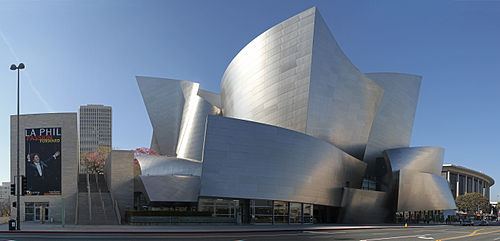
- Day 1: Downtown LA — Grand Central Market, the Bradbury Building, The Broad, and Walt Disney Concert Hall.
- Day 2: Hollywood and Griffith Observatory, connected by transit and a deliberate uphill segment.
- Day 3: Santa Monica and Venice along the beach path; keep Museum Row as a separate optional day.
Downtown LA: the most useful all-day cluster
Start at Grand Central Market, then cross Broadway for the Bradbury Building. A few blocks uphill sit The Broad, MOCA, and Frank Gehry's Walt Disney Concert Hall. North and east, Olvera Street, Union Station, Little Tokyo, and the Arts District extend the walk, but they add distance; treat them as a second half rather than casually calling everything “nearby.”
LA Tourism's Downtown guide groups Bunker Hill (with the Grand Avenue museums), El Pueblo, Chinatown, Little Tokyo, the Arts District, the Fashion District, and South Park as distinct districts. A practical first cluster stays around Broadway and Grand Avenue. Treat Little Tokyo and the Arts District as optional extensions, and verify current walking directions before you go.
Hollywood and Griffith Park
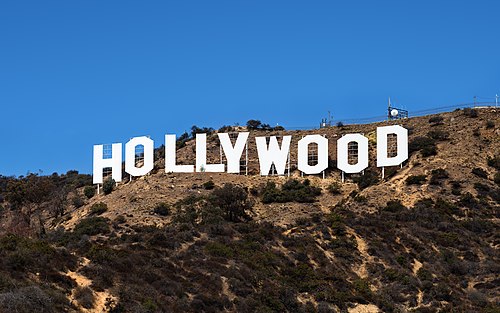
The Hollywood Walk of Fame is exactly what you'd guess: a busy mile along Hollywood Boulevard past the handprints at the TCL Chinese Theatre and the Dolby Theatre. Walk it once, then go up. Above Hollywood sits Griffith Observatory, on the south slope of Mount Hollywood in Griffith Park, with the clearest view of the LA basin after dark and the best straight-on look at the Hollywood Sign. From the Observatory, the short Charlie Turner Trail climbs to Mount Hollywood, and longer trails continue toward the sign — about as close as LA gets to a hiking day, all inside the city.
Santa Monica and Venice
The Santa Monica Pier marks the north end, with the car-free Third Street Promenade a couple of blocks back from the sand. Follow the beach path south to Venice Beach, then cut inland for the Venice Canals and Abbot Kinney Boulevard. The Santa Monica–Venice segment is flat and continuous; decide the turnaround point before adding the inland detour.
Museum Row and the Miracle Mile
On Wilshire Boulevard, four blocks pull a lot of weight. LACMA (with Chris Burden's thicket of old street lamps out front), the Ice Age fossil sites of the La Brea Tar Pits, and the Petersen Automotive Museum stand in a row, with The Original Farmers Market and The Grove a short walk off for lunch. The Tar Pits museum is closed for construction, with work planned through 2028, but many outdoor areas of Hancock Park stay open. Since May 2026 the D Line stops at Wilshire/La Brea and Wilshire/Fairfax, so you can reach Museum Row by subway. It makes a low-effort half day between the bigger districts.
A suggested walking day
One day, most-walkable version? Make it a Downtown loop:
Grand Central Market → Bradbury Building → The Broad & MOCA → Walt Disney Concert Hall → Olvera Street & the Pueblo → Little Tokyo → the Arts District → The Last Bookstore
This is a stop order, not a calculated street route; check current walking directions for its exact distance and time. Have breakfast at Grand Central Market before the heat builds, and stop for lunch in Little Tokyo or the Arts District. On a second day, drive or take the train up to Griffith Observatory early for the view and the sign, then spend the afternoon on the Santa Monica–Venice beachfront. If you'd rather see it laid out day by day, our ready-to-print city walk samples show the format, and how far to walk in a day helps you choose a conservative walking day for a spread-out city.
When to go and what to expect
Conditions vary sharply between the coast and inland LA. On hot days, put Downtown, Hollywood, or Griffith first and move the beach walk later. After rain, check trail conditions rather than assuming a Griffith route is open. Match an exposed walk to the day's heat, shade, air quality, and service alerts instead of relying on a universal “best season.”
A few things worth knowing:
- Pick your districts, then connect them. Two or three areas a day, with the Metro or a rideshare in between. Don't try to walk across town.
- Use the current line names. The B Line links Downtown and Hollywood; the E Line connects Downtown and Santa Monica; the D Line runs under Wilshire to Museum Row. Check LA Metro's trip planner and alerts before leaving.
- Go early in summer. Inland heat climbs fast, so save the coast for late afternoon.
- Sun, not shade. The beachfront and the park offer almost none. Hat, sunscreen, water.
- Real shoes for Griffith. Those are dusty trail climbs, not sidewalks.
For a car-free visit, choose accommodation near a useful rail corridor, cap each day at two clusters, and keep a fallback bus or rideshare for the final gap. LA Metro states that all buses and trains are wheelchair accessible and that rail platforms have a ramp, walkway, or elevator; still check live elevator status and the exact pedestrian approach before treating a route as step-free.
A one-neighborhood rest-day walk
Los Angeles rewards walkers in pockets rather than as a whole, so a rest day is best spent on foot in one of them. Downtown links the Broad, Grand Central Market and the Last Bookstore in a tight loop; the Santa Monica to Venice beach path is a flat, breezy alternative; and a slow wander around Hollywood covers the icons. Pick one neighbourhood and stay in it rather than driving across the basin. The Los Angeles 3-day walking route groups the city exactly this way.
Sources and checking notes
- LA Metro: fares, trip planning, service and accessibility
- LA Metro: current accessibility guide
- Discover Los Angeles: official Car Free LA itineraries
- Discover Los Angeles: Downtown and Arts District guide
- LA Metro: D Line Extension (Section 1 opened May 8, 2026)
- La Brea Tar Pits: museum construction and what stays open
- Griffith Observatory: hours and directions
- Hollywood Sign Trust: Mt. Hollywood hike via the Charlie Turner Trail
The stop order is editorial guidance, not live street routing or a distance measurement. Check current walking directions, Metro alerts, attraction hours, trail closures, weather, and street conditions on the day. Last checked October 8, 2026.
Los Angeles walking FAQ
Is Los Angeles a walkable city?
Not as a single city — the metro area is vast and built around driving. But LA is full of very walkable pockets: Downtown, Hollywood Boulevard, Santa Monica and Venice, Griffith Park, and Museum Row are all best explored on foot. The trick is to drive or take the Metro between them, then walk each one.
Is downtown Los Angeles walkable?
Yes within a chosen Downtown cluster. Grand Central Market, the Bradbury Building, The Broad and Walt Disney Concert Hall form a compact core; Olvera Street, Little Tokyo and the Arts District are longer optional extensions.
What are the most walkable neighborhoods in LA?
Useful visitor clusters include Downtown, Hollywood Boulevard, the Santa Monica–Venice beachfront, Old Pasadena, and Miracle Mile / Museum Row. They are separate walks connected by transit or rideshare, not one continuous route.
Do you need a car in Los Angeles?
It helps, but it is not essential for a visitor. The Metro rail connects Downtown, Hollywood, and Santa Monica, and rideshares cover the gaps. Many travelers base themselves in one walkable area and use transit or rideshare to reach the others.
How many days do you need in Los Angeles?
Three to four days lets you walk Downtown and the Arts District, Hollywood and Griffith Observatory, the Santa Monica–Venice beachfront, and Museum Row without rushing between them.
Is it safe to walk in Los Angeles?
The areas visitors typically walk are busy and generally fine by day; parts of Downtown change block by block, so stay on the main streets and use normal big-city awareness, especially after dark. The beach paths and Griffith Park are best enjoyed in daylight.
When is the best time to walk in LA?
Check the day's conditions rather than relying on one season rule: inland and coastal temperatures can differ, exposed routes need heat and shade planning, and Griffith trails may change after rain.