Tokyo walk at a glance
| Best for | First-time visitors who want old-Tokyo character plus modern energy |
|---|---|
| Walking time | 3–5 hours per route; a full day with stops |
| Distance | 5–8 km per route |
| Best start | Morning — Tokyo is calmest and coolest early |
| Best areas | Yanaka (old town), Shibuya–Harajuku, Asakusa |
| Use transit? | Yes — subway between distant districts, walk within each |
Is Tokyo walkable?
Yes, neighborhood by neighborhood, but not from one end of the sights to the other. In our catalog, the densest cluster of Tokyo's 20 best-known sights is Shibuya, Harajuku and Shinjuku: five of them (Shibuya Crossing, Takeshita Street, Omotesando, Meiji Jingu and Shinjuku Gyoen) fit inside one 2 km radius. Asakusa, Ueno and Tokyo Skytree sit 8 to 11 km to the north-east, and Odaiba and teamLab Planets are across the bay (straight-line distances).
So walk one area at a time and take the train between them. Shibuya with Harajuku, Asakusa with Ueno and Yanaka, or Ginza with the Imperial Palace each make a good walking day; the plan below uses the first pairing and adds Shinjuku.
Tokyo in 3 days: a day-by-day itinerary
Three days is enough to walk Tokyo's most distinctive neighborhoods without rushing — Shibuya, Harajuku and Omotesando, and Shinjuku. Here is the day-by-day shape of a Tokyo itinerary; the free Tokyo 3-day itinerary maps every stop, and the planner can build a separate, editable Tokyo plan for you.
- Day 1 — Shibuya: the cherry-tree canal of Nakameguro, the city view from Shibuya Sky, and the famous Shibuya Crossing at dusk.
- Day 2 — Harajuku & Omotesando: the youth energy of Takeshita Street, the boutiques and backstreets of Omotesando, and the view from Tokyo Tower.
- Day 3 — Shinjuku: the neon of Kabukicho, the lantern-lit alleys of Golden Gai, and the calm of Shinjuku Gyoen.
A city built for walking
Tokyo is technically one of the largest cities on earth, yet it feels intimate at street level. That's because it's really a loose federation of villages — each shitamachi (old town) neighborhood with its own character, shops, shrines, and rhythm. The subway connects them efficiently, but it's walking between and within them that reveals what makes each one different.
The streets are clean and navigation is logical. Tokyo is widely regarded as one of the safest major cities for walking, including for solo travelers, though the usual common-sense awareness late at night still applies. You can get lost here without ever feeling lost — a rare quality in a city of 14 million people. The sidewalks are wide, the traffic lights are long enough to actually use, and the ground floors of almost every building contain something worth looking at: a tiny ramen-ya, a flower shop that has been open since the 1950s, a vending machine selling hot coffee next to a 400-year-old shrine gate.
Urban planners study Tokyo for its density and transit efficiency, but what they sometimes miss is how the city's low building heights in residential areas — a consequence of earthquake codes and land subdivision patterns — keep the sky visible and the streets human-scaled. Even in dense wards like Shibuya and Shinjuku, you're rarely more than a five-minute walk from a quiet back street.
Yanaka: Tokyo's hidden village
If you walk only one neighborhood in Tokyo, make it Yanaka. Somehow this small pocket of Taito Ward largely escaped the 1923 Great Kanto Earthquake and the air raids of World War II, leaving it with a density of pre-modern Tokyo that exists almost nowhere else in the city. Walking its narrow lanes, you get a visceral sense of what the old shitamachi felt like before modernization rewrote the urban fabric.
Yanaka Ginza — a lantern-lined, 170-meter shotengai (local shopping street) of family-run shops — is the spine of the neighborhood. But the real discovery is in the streets radiating outward: wooden machiya townhouses with potted plants at their doorsteps, a cemetery that doubles as one of the city's best cherry blossom spots in spring, and Buddhist temples so quiet they seem to belong to a different century. Small galleries, independent bookshops, and ceramics studios have settled in alongside the traditional merchants, creating an unlikely but entirely natural mix.
The best approach is to enter from Nippori station and descend the hill into the old quarter, stopping at Yanaka Coffee for a pour-over before you start. Allow two to three hours to properly wander — more if you're the kind of walker who peers into every side alley, which in Yanaka, you should be.
Shimokitazawa: the bohemian quarter
Southwest of Shinjuku, Shimokitazawa — known to locals simply as Shimokita — has been Tokyo's bohemian neighborhood for decades. It is a place that has consistently resisted the city's tendency toward the new and the corporate. Vintage clothing stores stack floor-to-ceiling with carefully curated finds, tiny live music venues host bands that sound better in a 50-person room than they ever would in a stadium, and independent cafés serve the kind of coffee that comes with a small card explaining the farm it was grown on.
What makes Shimokitazawa particularly rewarding for walkers is its scale and its texture. The streets here were built before cars were common, so they wind and narrow in ways that force you to slow down. The neighborhood's commercial streets branch into residential blocks within fifty meters, so the transition between discovery and quietude is constant and surprising.
Start at the north exit of Shimokitazawa station and walk in any direction. The neighborhood is small enough to cover in two hours but interesting enough to fill a full afternoon. If you're visiting on a weekend, check whether there's a record fair or flea market happening — they're frequent here, and they're excellent.
The Shibuya to Harajuku corridor
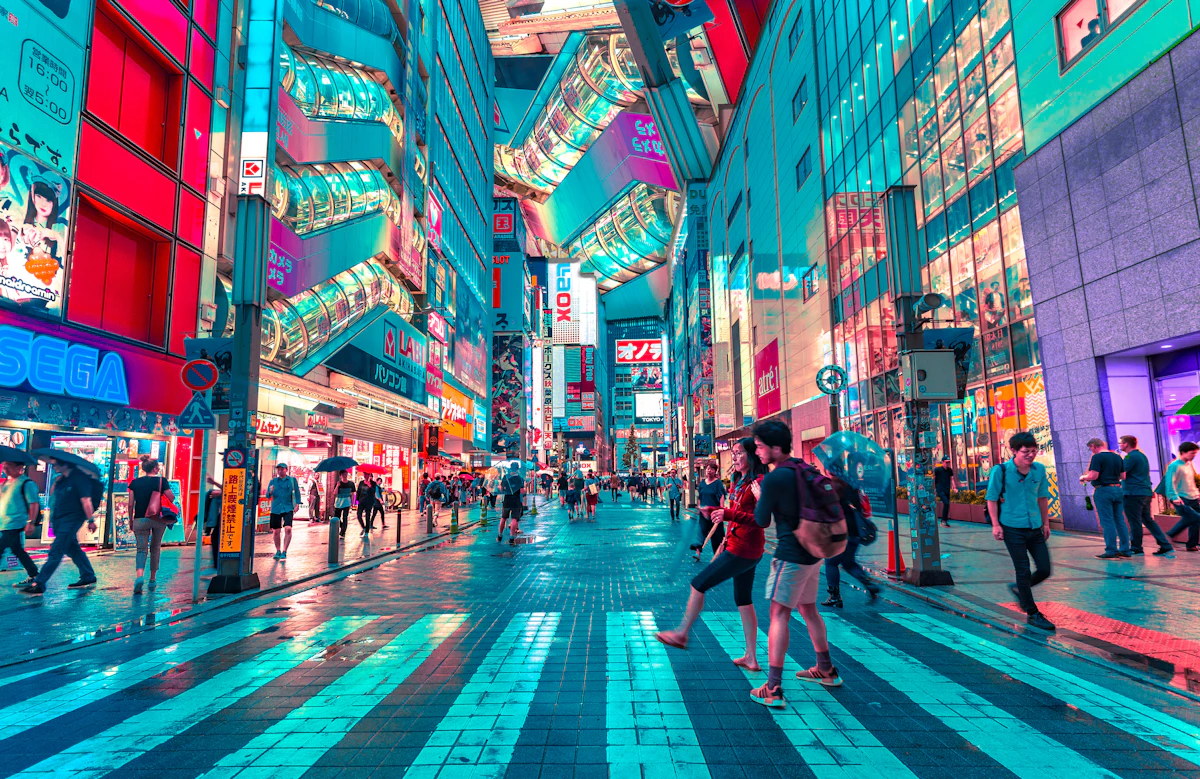
The walk from Shibuya up through Omotesando and into Harajuku is one of the great urban walks in any city. You start at the Shibuya Scramble, where upwards of 1,000 people cross from all directions at once — and immediately you feel the controlled energy that makes Tokyo so compelling. Stand on the bridge above the crossing and watch it for five minutes before you descend into it.
From Shibuya, walk north along Omotesando — a broad, tree-lined boulevard that functions as Tokyo's answer to the Champs-Élysées, but with considerably better architecture. The zelkova trees that line the avenue are particularly beautiful in autumn, when they turn rust and gold. The ground-floor retail here runs from Comme des Garçons to small Japanese-only bakeries tucked into basement courtyards.
The avenue ends at Harajuku, where Takeshita Street awaits — a 350-meter corridor of youth fashion, crepe stands, and visual spectacle that defies easy description. The contrast between the broad European-influenced boulevard and this narrow explosion of subcultural energy is entirely Tokyo: a city that holds contradictions in very close proximity. Cap the walk with a quiet hour in Meiji Shrine's forested grounds, which feel impossibly serene given that you're a ten-minute walk from the middle of it all.
Asakusa & old Edo
Asakusa is where Tokyo remembers that it was once Edo — the feudal capital of the Tokugawa shoguns. The neighborhood anchors the western bank of the Sumida River and has been a center of popular culture and commerce since the 17th century. Its main attraction, Senso-ji, is Tokyo's oldest temple, but the experience of arriving there on foot rewards those who do it right.
Approach from Kaminarimon Gate, where the massive red lantern marks the entrance to Nakamise-dori — a shopping street that has existed in some form for three centuries. The stalls sell ningyo-yaki (small bean-paste cakes shaped like pagodas), hand-dyed tenugui cloths, lacquerware, and the kind of tourist goods that have been sold here long enough to qualify as tradition. Press through the crowds to the main hall, where the incense smoke drifts over worshippers and visitors alike, and take a few minutes to simply stand still amid the motion.
The more interesting Asakusa lies in the streets to the north and east of the main complex. Denpoin-dori preserves the look of old-city Tokyo, with wooden shopfronts painted in muted reds and blacks. The Rokku entertainment district, once home to cinemas and variety theaters, is quieter now but retains its old-city atmosphere. Head deeper east to find craftspeople's workshops — makers of geta sandals, koinobori carp flags, and hagoita battledore paddles — operating in the same narrow lanes where their grandparents worked.
End the Asakusa section with a walk along the Sumida River embankment. The river-side promenade stretches south toward Ryogoku and north toward Senju, and on a clear day the view of the Sky Tree rising above the low-rise neighborhoods is as good as any in the city.

A suggested walking route
If you have one day and want the old-Tokyo side of the city, this east-side route threads the best shitamachi neighborhoods into a single walk:
Nippori Station → Yanaka Ginza → Nezu Shrine → Ueno Park → Kappabashi kitchen street → Senso-ji & Asakusa → Sumida River promenade
It runs about 7–8 km and fills a relaxed morning-to-afternoon with stops. Start at Nippori around 9am while Yanaka is quiet, break for lunch near Ueno or Asakusa, and finish along the river with the Sky Tree in view. For a second day, walk the west side — Shibuya Scramble → Omotesando → Takeshita Street → Meiji Shrine — a denser, more modern 4 km. Want it mapped day by day? Our 3-day Tokyo walking itinerary and the ready-to-print Tokyo sample lay both routes out in order. Heading on to Kansai? Pair this with our Osaka and Kyoto walks.
Walking Tokyo by season
Tokyo changes dramatically with the seasons, and timing a walking trip around the calendar is one of the best investments you can make. Each season offers something that the others cannot, and the best-informed visitors plan around at least one of them.
Spring (late March to mid-April) is cherry blossom season, and while the crowds are real, the spectacle is worth it. Shinjuku Gyoen — a large park in the heart of the city — is one of the most beautiful spots, particularly because it contains about 70 varieties of cherry trees that bloom at slightly different times, extending the season. Ueno Park is more democratic and festive: families spread blue tarps under the canopy and hold hanami picnics from morning until well after dark. The Yanaka cemetery is a less-visited alternative that turns quietly magical when the blossoms fall like snow on the grave markers.
Autumn (late October to early December) brings koyo — the turning of the maple and ginkgo leaves — and arguably the best walking weather of the year. Rikugien, a strolling garden in Bunkyo Ward, is the city's finest spot for autumn color: the landscape garden was designed in 1702 to evoke famous scenes from classical poetry, and the maple canopy over the central pond turns crimson and orange in ways that justify every photograph you will take. Shinjuku Gyoen is again worth visiting for the ginkgo alleys, and the garden's quieter corners feel genuinely meditative in autumn's thin golden light.
Summer (July and August) is hot and humid, but it also brings Tokyo's summer festival season. The Sumida River Fireworks Festival — one of the city's oldest, dating to the 18th century — fills the banks with yukata-clad crowds on a single spectacular evening each July. Neighborhood matsuri festivals pop up across the city throughout the season, with portable shrines carried through the streets and food stalls operating late into the night. Early morning walks are the key to summer: the city is cooler, quieter, and oddly peaceful in the hour after dawn.
Winter is underrated. The illuminations along Omotesando and in Shinjuku are tasteful rather than excessive, the air is sharp and clear, and the holiday crowds thin out after New Year's Eve. A walk to a shrine on New Year's Day — a practice called hatsumode — is one of the year's best shared rituals, even for visitors.
Practical tips for walking Tokyo
- IC card: Get a Suica or Pasmo card at the airport. It works on all trains, subways, and most convenience stores.
- Conbini culture: 7-Eleven, Lawson, and FamilyMart are not just convenience stores — they're full restaurants. Eat at least one meal from one.
- Walking hours: Tokyo at 7am is a completely different city. Early morning in any neighborhood is worth the alarm.
- Getting lost: Google Maps works perfectly in Tokyo. But allow yourself to turn it off for an hour per day.
- Shoes: You will walk 20,000+ steps per day without trying. Plan accordingly — and note that many traditional restaurants, temples, and ryokan require you to remove your shoes at the entrance.
- Cash: Japan is moving toward card acceptance, but many small neighborhood shops, temples, and market stalls still prefer cash. Keep ¥5,000–10,000 on hand.
- Weather apps: Tokyo's weather can shift quickly. Check the Japan Meteorological Agency’s forecasts for local conditions.
Tokyo is a city that takes time to understand, and the more time you give it on foot, the more it gives back. Budget at least three full walking days — ideally spread across different neighborhoods and times of day. Then, if you're wise, stay longer.