← BackWalking guide →
Trip Overview

Paris

3 Days · Solo · Balanced
citywalkplan.com
Daily Plan
Day 1
3 Spots
Notre-Dame Cathedral · Sainte-Chapelle · Latin Quarter
Day 2
3 Spots
Eiffel Tower · Saint-Germain-des-Prés · Luxembourg Gardens
Day 3
3 Spots
Musée d'Orsay · Palais Royal · Louvre Museum
Trip Notes
The first page gives the full route overview. Each following page breaks the trip into a single-day map and spot cards so it is easy to share, print, or turn into a PDF.
Keep CityWalk Plan Free
Trip planning is free. If this itinerary helps, please consider booking through our partner links to support us.
No extra cost to you. Affiliate URLs can be added later.
About this route

How this Paris walk is built

Why this order. The route is built around the two riverbanks. Day 1 takes the Île de la Cité and the Left Bank, Day 2 the 7th and Saint-Germain, and Day 3 the Right Bank museums, so each day is one walkable quarter with the Seine as your handrail.

How far each day. About 4 to 5 km, flat the whole way. You rarely need the Métro within a day.

What you can skip. Do not try to do both the Louvre and the Musée d'Orsay in depth on one trip. Pick one to go inside and admire the other from the street.

If it rains. Move Day 3 up: the Orsay, the Louvre, and the Palais Royal arcades are almost all indoors.

First time vs second visit. First-timers keep the icons. Returning visitors should swap Day 1 for the Marais and the Canal Saint-Martin.

Day 1

Paris · 3 Spots
1
Notre-Dame Cathedral
Historic Site · 1.5-2 hours
Notre-Dame de Paris (French: Cathédrale Notre-Dame de Paris French: [nɔtʁ(ə) dam də paʁi] : "Cathedral of Our Lady of Paris"), often referred to simply as Notre-Dame, is a medieval Catholic cathedral on the Île de la Cité (an island in the River Seine), in the 4th arrondissement of Paris, France. It is the cathedral church of the Roman Catholic Archdiocese of Paris. The cathedral, dedicated to the Virgin Mary ("Our Lady"), is considered one of the finest examples of French Gothic architecture.
NoteCheck the official site for the latest entry policy and opening hours. Early visits are usually calmer and better for photos.
Wikipedia →
2
Sainte-Chapelle
Sainte-Chapelle
Historic Site · 1.5-2 hours
The Sainte-Chapelle (French: [sɛ̃t ʃapɛl]; English: Holy Chapel) is a royal chapel in the Gothic style, within the medieval Palais de la Cité, the residence of the Kings of France until the 14th century, on the Île de la Cité in the River Seine in Paris, France. Construction began sometime after 1238 and the chapel was consecrated on 26 April 1248. The Sainte-Chapelle is considered among the highest achievements of the Rayonnant period of Gothic architecture.
NoteCheck the official site for the latest entry policy and opening hours. Early visits are usually calmer and better for photos.
Wikipedia →
3
Latin Quarter
Latin Quarter
Neighborhood · 1.5-2 hours
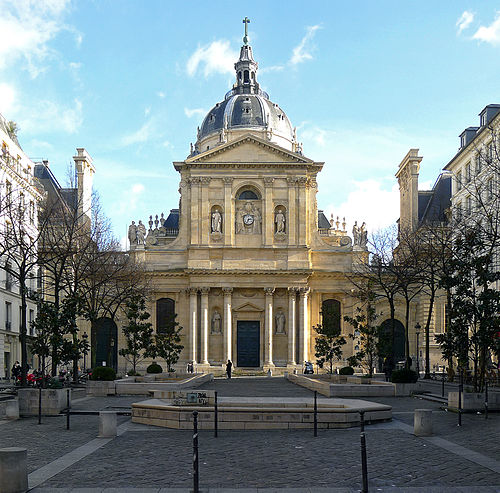
The Latin Quarter of Paris (French: Quartier latin, IPA: [kaʁtje latɛ̃]) is a district in Paris on the left bank of the Seine, around the Sorbonne. Located in the city's 5th and the 6th arrondissements, it is known for its concentration of universities.
NoteThis area works best when you leave room to walk slowly, browse side streets, and stop for coffee or snacks.
Wikipedia →

Day 2

Paris · 3 Spots
1
Eiffel Tower
Eiffel Tower
Landmark · 1-1.5 hours
The Eiffel Tower ( EYE-fəl; French: Tour Eiffel [tuʁ ɛfɛl] ) is a lattice tower on the Champ de Mars in Paris, France. It is named after the engineer Gustave Eiffel, whose company designed and built the tower from 1887 to 1889. Locally nicknamed "La dame de fer" (French for "Iron Lady") for its use of wrought iron, it was constructed as the centrepiece of the 1889 World's Fair, and to crown the centennial anniversary of the French Revolution.
NoteAim for early morning or late afternoon light. Popular viewpoints often need timed tickets in peak season.
Wikipedia →
2
Saint-Germain-des-Prés
Neighborhood · 1.5-2 hours
Saint-Germain-des-Prés (French pronunciation: [sɛ̃ ʒɛʁmɛ̃ de pʁe]) is one of the four administrative quarters of the 6th arrondissement of Paris, France, located around the church of the former Abbey of Saint-Germain-des-Prés. Its official borders are the River Seine on the north, the rue des Saints-Pères on the west, between the rue de Seine and rue Mazarine on the east, and the rue du Four on the south. Residents of the quarter are known as Germanopratins. It forms part of the Latin Quarter.
NoteThis area works best when you leave room to walk slowly, browse side streets, and stop for coffee or snacks.
Wikipedia →
3
Luxembourg Gardens
Luxembourg Gardens
Garden · 1.5-2 hours
The Jardin du Luxembourg (French pronunciation: [ʒaʁdɛ̃ dy lyksɑ̃buʁ]), known in English as the Luxembourg Garden, colloquially referred to as the Jardin du Sénat (Senate Garden), is located in the 6th arrondissement of Paris, France. The creation of the garden began in 1612 when Marie de' Medici, the widow of King Henry IV, constructed the Luxembourg Palace as her new residence. The garden today is owned by the French Senate, which meets in the palace. It covers 23 hectares (56.
NoteCheck the official site for current hours and ticket rules before you go.
Wikipedia →

Day 3

Paris · 3 Spots
1
Musée d'Orsay
Musée d'Orsay
Museum · 2-2.5 hours
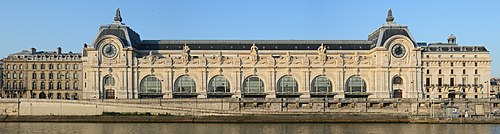
The Musée d'Orsay (UK: MEW-zay dor-SAY, US: mew-ZAY -⁠, French: [myze dɔʁsɛ]; English: Orsay Museum) is a museum in Paris, France, on the Left Bank of the Seine. It is housed in the former Gare d'Orsay, a Beaux-Arts railway station built from 1898 to 1900. The museum holds mainly French art (including works by France based foreign artists) dating from 1848 to 1914, including paintings, sculptures, furniture, and photography.
NoteReserve timed entry when available. A short highlights route and audio guide usually make the visit much more efficient.
Wikipedia →
2
Palais Royal
Palais Royal
Landmark · 1-1.5 hours
The Palais-Royal (French: [pa.lɛ ʁwa.jal]) is a former French royal palace located on Rue Saint-Honoré in the 1st arrondissement of Paris. The screened entrance court faces the Place du Palais-Royal, opposite the Louvre. Originally called the Palais-Cardinal, it was built for Cardinal Richelieu from about 1633 to 1639 by architect Jacques Lemercier. Richelieu bequeathed it to Louis XIII, before Louis XIV gave it to his younger brother, Philippe I, Duke of Orléans.
NoteAim for early morning or late afternoon light. Popular viewpoints often need timed tickets in peak season.
Wikipedia →
3
Louvre Museum
Louvre Museum
Museum · 2-2.5 hours
The Louvre, or the Louvre Museum (French: Musée du Louvre [myze dy luvʁ] ), is a national art museum in Paris, France. The Louvre, a former royal palace, is known for its collection of celebrated paintings collected by the French kings, including the Mona Lisa of Leonardo Da Vinci. The museum received 9 million visitors in 2025 and is regularly ranked as the most visited art museum in the world. Twenty-seven percent of the visitors in 2012 were French, while 73 percent were from other countries.
NoteReserve timed entry when available. A short highlights route and audio guide usually make the visit much more efficient.
Wikipedia →
FAQ

Paris 3-day itinerary: FAQ

How many days do you need in Paris?
Three days is a comfortable amount of time to walk Paris's main areas without rushing. This itinerary gives each day to one part of the city, with room for meals and unplanned detours.
Is 3 days enough for Paris?
Yes. Three days covers the highlights of Paris on foot at an unhurried pace. With more time you can add day trips or slower neighbourhood wandering, but three days sees the essentials.
Can you do Paris in 2 days or one day?
Yes. For two days, follow Day 1 and Day 2 and drop the third; for a single day, walk Day 1, which covers the most iconic stretch. The route is split by area so it shortens cleanly.
How much walking is in this Paris itinerary?
Each day is a comfortable walk grouped into one neighbourhood, so you spend the day walking rather than commuting between far-apart sights. For the most relaxed pace, follow the day-by-day plan above and let a tram or taxi cover the longest gaps.
Can you edit or export this Paris itinerary?
Yes. It is a free, self-guided walking itinerary. Open it in the Paris planner to reorder or remove stops, share a link, or export an offline copy to follow on your phone.