
Why walking changes everything
When you walk a city, you move at the same speed the city was designed for. Medieval streets, canal-side lanes, and market alleyways were never meant to be seen from a car window. They were built for people on foot, and they only make sense that way.
Walking also forces a kind of attention that other modes of travel don't. You notice the texture of cobblestones, the smell of a bakery, the sound of a language you don't speak but are starting to recognize. These details are invisible at 60 kilometers an hour. They are everything at 5, roughly a typical walking pace.
There's a memory argument for this too. Places you reach step by step, with time to take in the streets between them, tend to stay with you longer than places you are delivered to. Cities experienced on foot leave deeper impressions. You remember the corner, not just the landmark.
The pace principle
The biggest mistake first-time city walkers make is treating it like exercise — covering maximum ground as efficiently as possible. That's jogging, not walking. A real city walk has a pace that allows for stops, detours, and sitting down for no particular reason. Our Kyoto 3-day walk is built around that pace — one neighbourhood per half-day, with room to wander.
A useful rule: plan to cover no more than 2–3 kilometers per hour, including stops. That means a three-hour morning walk might take you only 6–8 kilometers — but you'll actually see what's there, not just pass through it.
Getting lost on purpose
The best city walks include at least one deliberate wrong turn. Pick a direction that isn't on your route and follow it for ten minutes. You'll either find something interesting or you'll find your way back — and either outcome is fine.
The goal is to disrupt the tyranny of the itinerary. An itinerary is a suggestion, not a sentence. The best travel happens in the gaps between scheduled stops, in the unplanned half-hour when you followed a sound and ended up somewhere you couldn't have searched for.
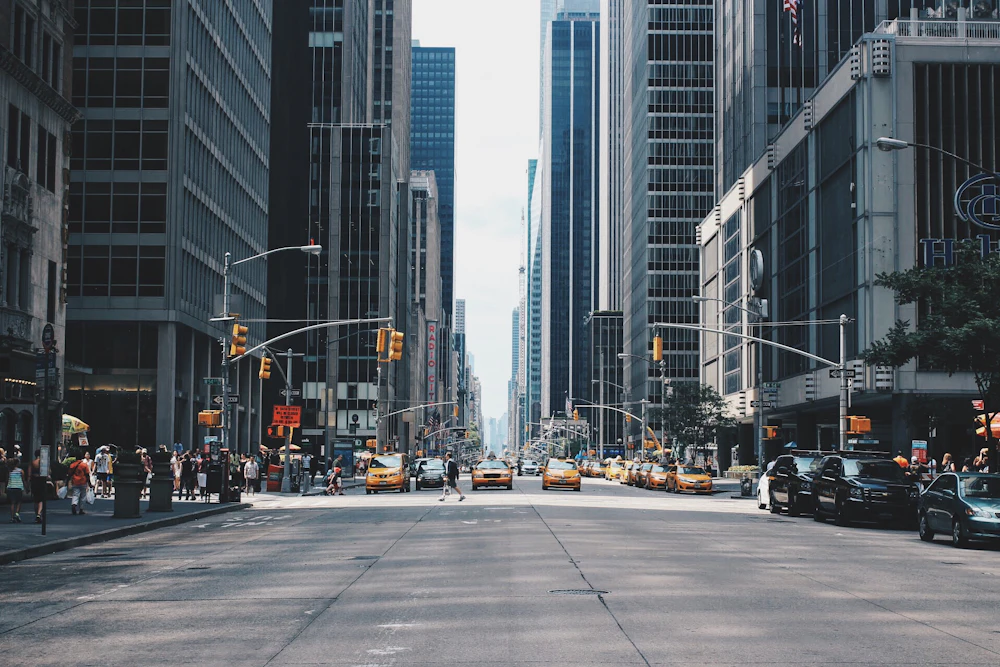
What to bring — and what to leave behind
You need comfortable shoes (not new ones — break them in first), a fully charged phone with an offline map, water, and a small amount of cash. That's genuinely it.
Leave behind: the giant backpack, the DSLR with three lenses, the laminated map, and the detailed hourly schedule. The more you carry, the more you'll think about carrying it. Travel light enough that you forget you're a tourist.
The golden hour rule
The first and last hours of daylight are when cities look best. Streets that feel ordinary at noon become extraordinary at 7am — empty, golden, unhurried. Similarly, the hour before sunset softens everything: the light, the crowds, the noise.
If your schedule allows, build your city walks around these windows. Start before the city wakes up. End as the lights come on. The hours in between are for eating, resting, and planning tomorrow's walk.
The tools that actually help
Gear and apps tend to be either indispensable or completely useless, and the line between them is thinner than you'd think. The ones that actually make a difference:
Offline maps are non-negotiable. Google Maps lets you save an area for offline use, though walking directions don't work offline and downloads aren't available in every country; MAPS.ME offers offline maps with walking navigation. Download before you leave home. Do it on Wi-Fi the night before you fly. You'll need a map within twenty minutes of arriving — guaranteed — and airport Wi-Fi is both slow and unreliable. An offline map that works at full speed with no data is worth more than any travel gadget you could pack.
A comfortable bag matters more than it sounds. Not a daypack that pulls your shoulders back and marks you as a hiker, and not a clutch so small it holds nothing useful. A small crossbody or slim sling that sits flat against your body lets you walk for hours without thinking about what you're carrying. Your back will thank you on day three.
The note-taking habit is underrated. Not for planning — for recording. A voice memo, a three-sentence note in your phone's native app, or a line in a paper notebook. The name of the café, the street the market was on, what you ordered. Photos capture visuals but lose context fast. Written notes from even thirty seconds of attention stay vivid for years.
A home base café in each neighborhood is one of those strategies that sounds small but shapes the whole trip. Find one place — ideally somewhere you can sit with a coffee for an hour without anyone minding — and return to it. It becomes your landmark, your rest stop, your orientation point. It's also where you'll have the conversations you'd never have otherwise, because regulars talk to regulars.
City walking vs. hiking: why urban terrain is harder than it looks
Experienced hikers sometimes assume city walking will be easy. They're used to covering 20 kilometers a day on trails, so 15 kilometers around a city should be nothing. It isn't nothing. Urban terrain is harder in ways that sneak up on you.
Cobblestones and uneven pavement are the first surprise. Hiking trails are predictable in their unpredictability — you know to watch your step. City streets lull you into inattention and then deliver a raised edge or a sudden kerb that your ankle remembers for three days. Cities across Southern Europe, Latin America, and much of Asia are particularly hard on feet that haven't been broken in on similar surfaces.
Standing in queues is a different kind of physical punishment than walking. You're stationary, often in full sun, often on concrete that radiates heat upward. Thirty minutes in a queue outside a museum can leave you more drained than an hour of actual walking. If you're prone to sore feet or back pain, queue time is the hidden variable that ruins the afternoon.
Crowds add a cognitive load that's genuinely exhausting. Constant micro-adjustments to avoid other people, noise at levels that prevent real thought, the visual cacophony of signage and advertising — urban environments are stimulating in a way that builds up quietly and depletes you faster than you expect. This is not weakness. It's the appropriate response to an environment your brain was never designed for at this scale.
Heat reflected off concrete is different from sun on a hiking trail. There's no shade from a forest canopy, no breeze channeled through a valley. On a hot day in a dense city, you're absorbing radiated heat from below as well as above. Add full exposure, high humidity in coastal cities, and the physical effort of walking for hours, and you have a recipe for exhaustion that hits mid-afternoon without warning.
How to recover: build rest days into any trip longer than four nights. A rest day doesn't mean staying in the hotel — it means a slow morning, a long breakfast, a park. Afternoon naps are one of travel's most underused tools. Even twenty minutes lying down after lunch dramatically restores energy for the evening. If you're in a city with parks — and most great walking cities are — use them. Lie on the grass. Watch clouds. The city will still be there when you get up.
Walking as a philosophy
The French have a word for it — flâneur — the person who wanders urban environments with no destination in mind, purely for the pleasure of observation. It's both a way of moving through space and a way of seeing it.
You don't have to be in Paris to be a flâneur. Any city rewards this kind of attention. The prerequisite is simply the willingness to slow down, look up, and resist the pressure to be somewhere else.
The best trips are not the ones where you saw the most things. They're the ones where you were most present for what you saw.
Attention still needs practical support
Unhurried walking is easier when basic logistics are settled. Choose a compact neighborhood, verify the one place with fixed opening hours, save a route home, and carry enough water and battery for the conditions. Then put the phone away between decisions. The plan should remove background anxiety, not compete with the street for attention.
Try a simple practice: walk one block without taking a photograph and notice three things at different scales—a doorway, the rhythm of a whole street, and a sound or smell. At the next corner, choose the direction that seems more interesting unless it would break a reservation or safe route back. This gives wandering a boundary without scripting it.
At the end of the day, remember one ordinary detail alongside the famous landmark. A delivery bicycle, a courtyard tree, a phrase on a shop window, or the way commuters used a square may become the clearest memory. Presence is not anti-planning; it is what planning should make possible.
Sources and checking notes
Typical walking speed (about 5 km/h): Wikipedia, Preferred walking speed. Offline maps: Google Maps Help on saving offline areas and their limits; the MAPS.ME App Store listing for offline maps and walking navigation. The term flâneur: Wikipedia, Flâneur. Pace, distance and rest advice is editorial guidance, not measured routes. Last checked October 8, 2026.